
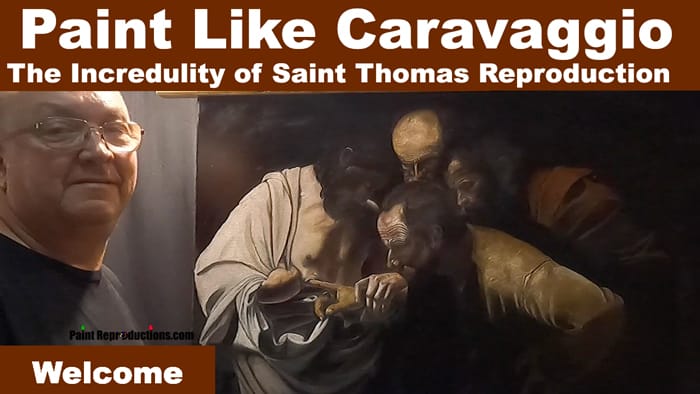
The Incredulity of Saint Thomas
Course Title: Paint Like Caravaggio: The Incredulity of Saint Thomas
Recreating Caravaggio’s “The Incredulity of Saint Thomas” is not just an artistic endeavor; in fact, it’s a chance to immerse yourself in a pivotal moment of Christian theology that resonates deeply with audiences. Moreover, this Baroque masterpiece exemplifies both technical brilliance and emotional depth, making it an ideal choice for your next project. Below are some compelling reasons to take on this extraordinary work:
Artistic and Technical Mastery
Chiaroscuro Technique:
Caravaggio’s dramatic use of light and shadow (chiaroscuro) revolutionized painting; hence, making his works appear almost three-dimensional. Consequently, recreating this technique allows you to study and practice the interplay between light and dark, enhancing your artistic skills.
Realism and Detail:
Caravaggio’s meticulous attention to human anatomy and realistic textures—such as Thomas’s dirtied fingernails—teaches precision and emphasizes the importance of authenticity in art.
Innovative Composition:
Notably, the painting’s dynamic arrangement, with Christ guiding Thomas’s hand into his wound, creates a sense of immediacy and intimacy. Learning this composition can therefore improve your ability to depict narrative scenes.
Historical and Religious Significance
Meditation on Faith:
Notably, the painting captures the tension between doubt and belief, inviting viewers to reflect on their spiritual journey. Thus, recreating it allows you to connect deeply with this timeless theme.
Baroque Iconography:
Additionally, the absence of traditional divine symbols (like halos) emphasizes Christ’s humanity, making the scene both relatable and profound. This approach, which was groundbreaking in its time, remains influential today.
Legacy and Influence
Understanding Caravaggio’s Impact:
Not only did Caravaggio’s realism and dramatic style influence countless artists, including Rembrandt and Rubens, but by painting this work, you also immerse yourself in the techniques that shaped modern art.
Timeless Appeal:
Furthermore, *The Incredulity of Saint Thomas* continues to resonate with audiences due to its emotional depth and universal themes of doubt and revelation, making it a meaningful project for personal growth as an artist.
Imagine, therefore, immersing yourself in the process of recreating this masterpiece—not just as a mere exercise in technique, but as a transformative journey that delves deep into storytelling, emotion, and faith through the art itself. By engaging with this work, you will not only appreciate the unparalleled genius of Caravaggio but you’ll also elevate your own artistic craft to new heights. Don’t miss the opportunity to enrich your skills and, ultimately, connect with the profound narrative woven into every brushstroke.
Skill Level: Intermediate to Advanced
Recommended Prerequisites:
Creating working Images in Photoshop
How To Paint With A Limited Palette Like A Pro
Get Accurate Colors With The Color Checker!.
Build a Color Checker for under $10.00.
Original The Incredulity of Saint Thomas

The Incredulity of Saint Thomas
Artist Name: Michelangelo Merisi da Caravaggio
Dated: 1601
Medium: Oil on Canvas
Dimensions: 118 cm × 156.5 cm
Location: Collezione privata, Firenze
Recommended Prerequisites:
Creating working Images in Photoshop
How To Paint With A Limited Palette Like A Pro
Get Accurate Colors With The Color Checker!.
Build a Color Checker for under $10.00.
Material List
Materials List for Oil Painting Reproduction:
The canvas has been coated with gesso, rotated horizontally and vertically, and sanded smoothly between each coat. As a result, I painted this canvas about ten times to create a smooth working surface to support glazing techniques.
Clickable links will take you to Amazon, where they were purchased for reproduction.
Tools:
- Proportional Divider
- Color Checker
- Glass Palette
- Palette Knife
- Ruler
- Red or Black Pastel pencil for gridlines
Canvas For Reproduction:
36″ W X 24″ H prepared canvas
Oil Paints:
All reproductions use a minimal pallet of six colors:
Glazing Mixture:
- Pure Refined Linseed Oil for mixing and thinning
- Windsor Newton Glazing and Blending Medium for glazing and thinning for details
Sketching With Paint:
Gamblin Gamsol is a solvent artists use to clean their brushes and thin down brown paint for the initial sketch on canvas. Remember not to use Gamsol or any other cleaning solvent for anything other than sketching. For example, George Werbacher uses brown paint thinned with Gamsol when needed for the initial oil painting sketch. In addition, George uses linseed oil only when prepping oil paints for use in all his reproductions and originals.
Demonstration Videos:



George Werbacher
Oil Painting Reproduction Artist
Hi, I'm George, a passionate painter. I share all my work for free to help fellow artists. I'm offering a course on recreating famous artworks. Feel free to ask me any questions!
Leave a Reply